ARDUINO FILM DEVELOPER
Taking a photograph creates an invisible latent image. A developer bath reveals this picture by
turning light-exposed silver dark, where exact timing controls the final detail. This interactive
experience simulates the hands-on process of film development, completely eliminating the need for
darkrooms or chemical solutions.
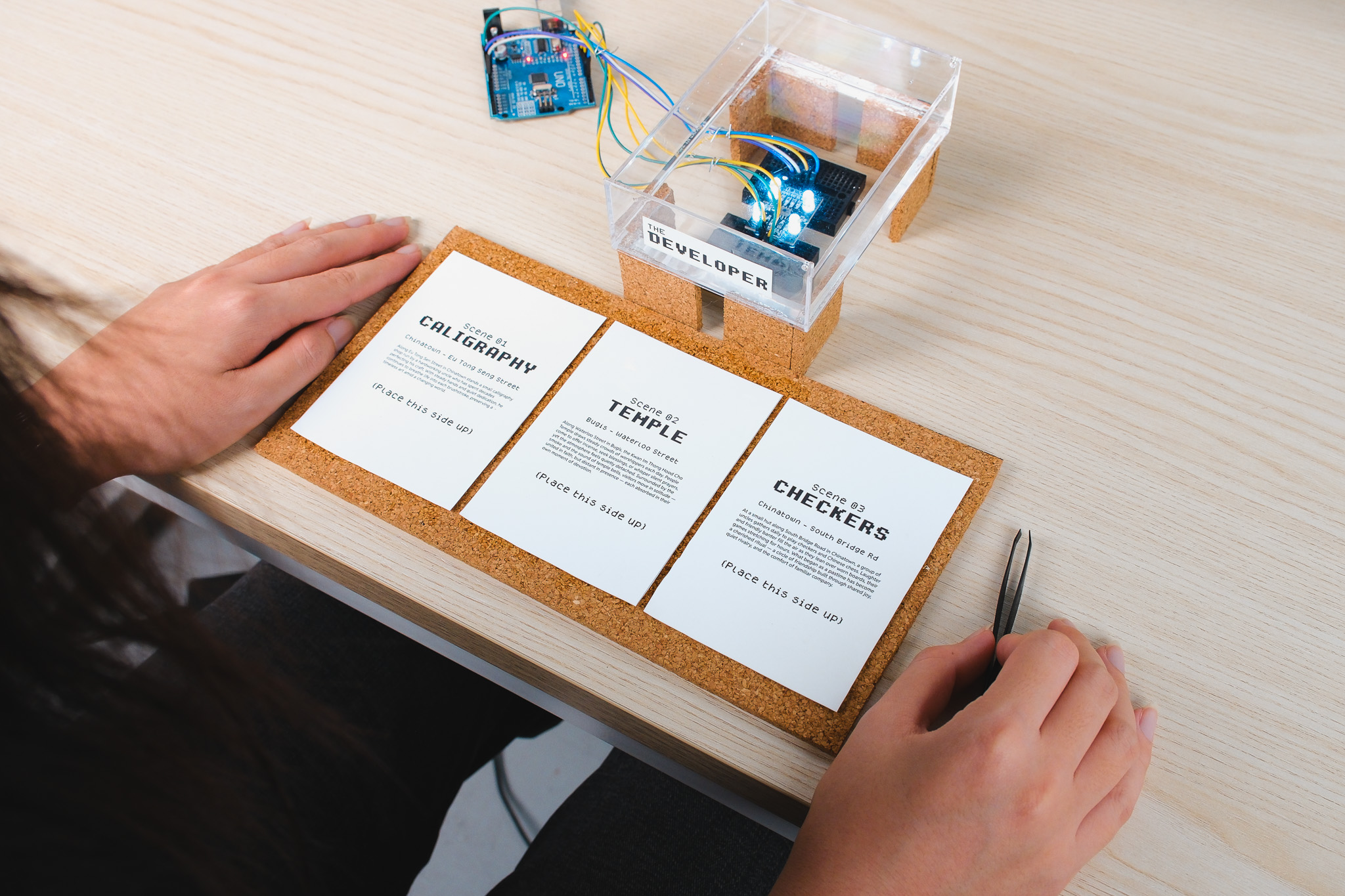
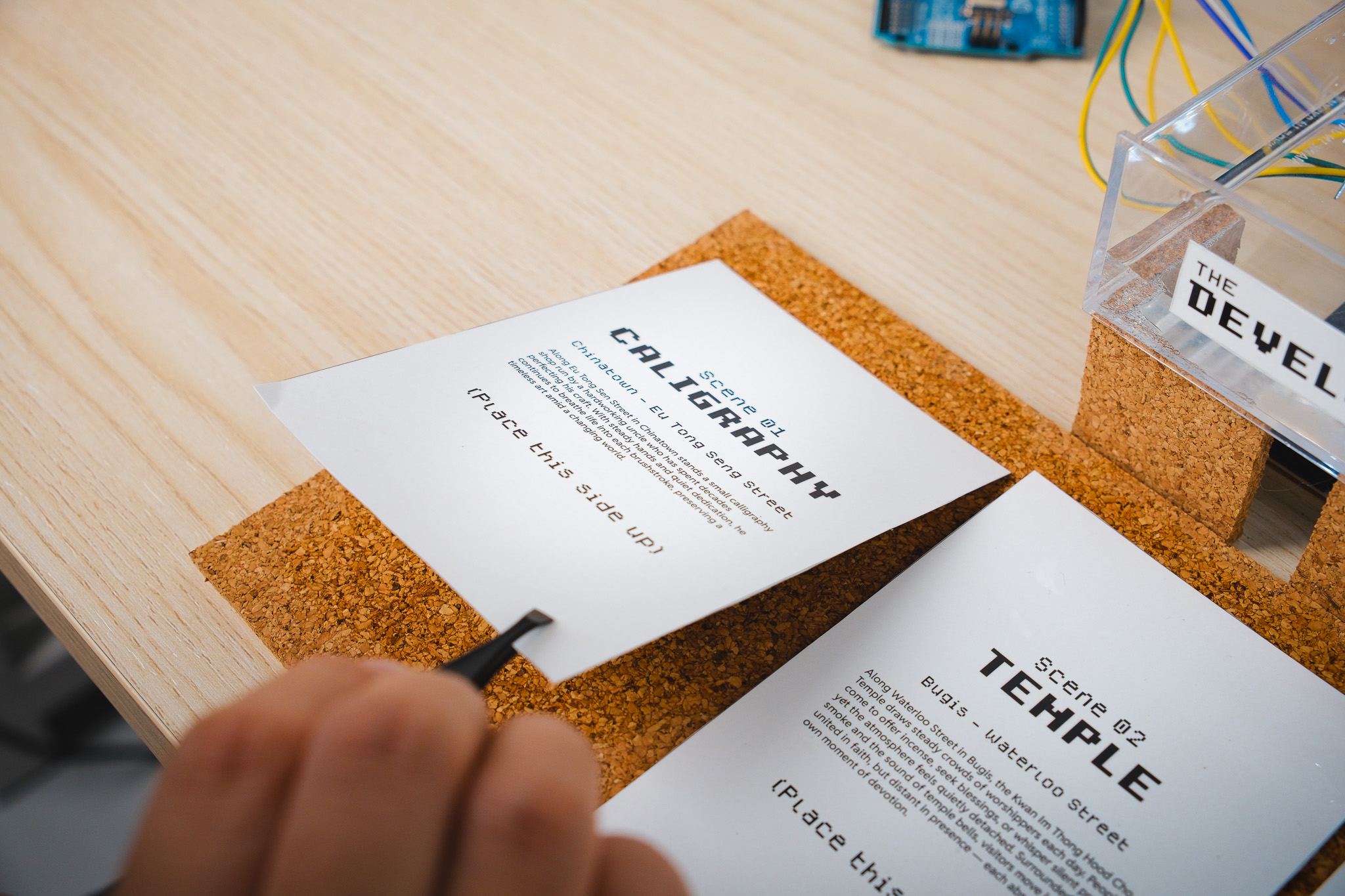
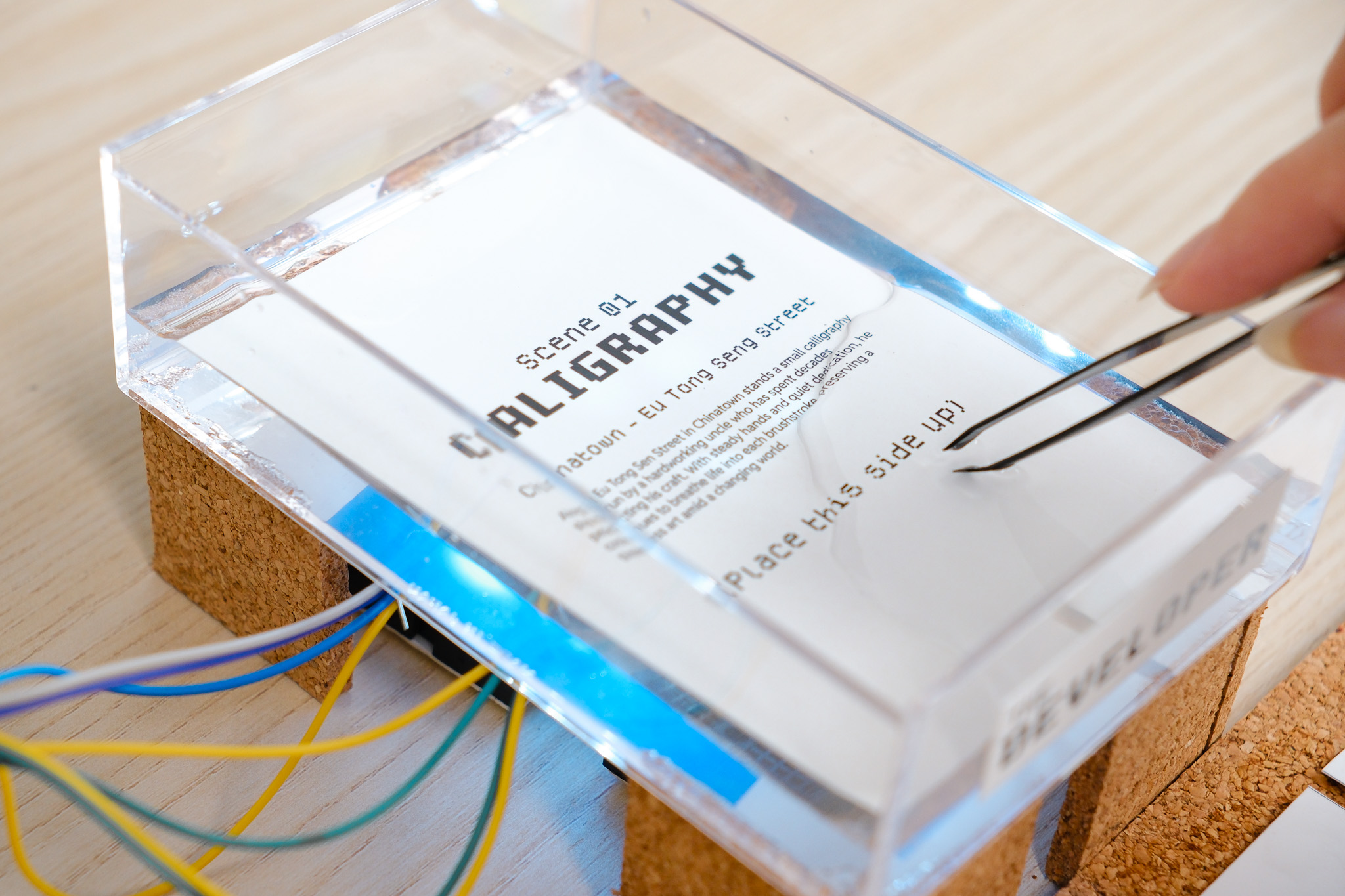
Users choose one of three film papers with text descriptions of the image it contains and place it
in the developer tray.
A color sensor reads the film and triggers TouchDesigner visuals and
audio as
the image and its soundscape gradually develop.
TAKING THE
PHOTOGRAPHS
PICTURES OF HERITAGE
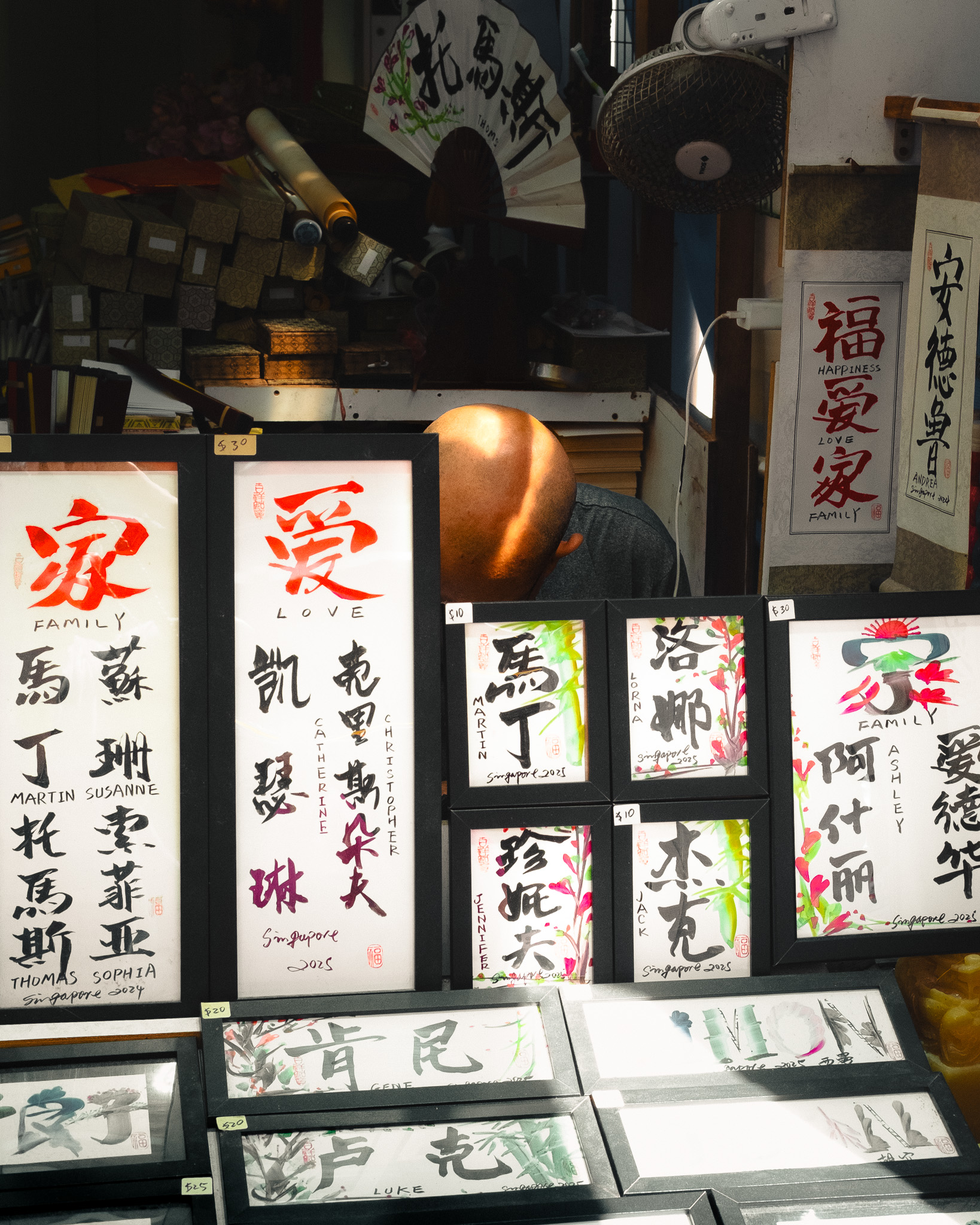
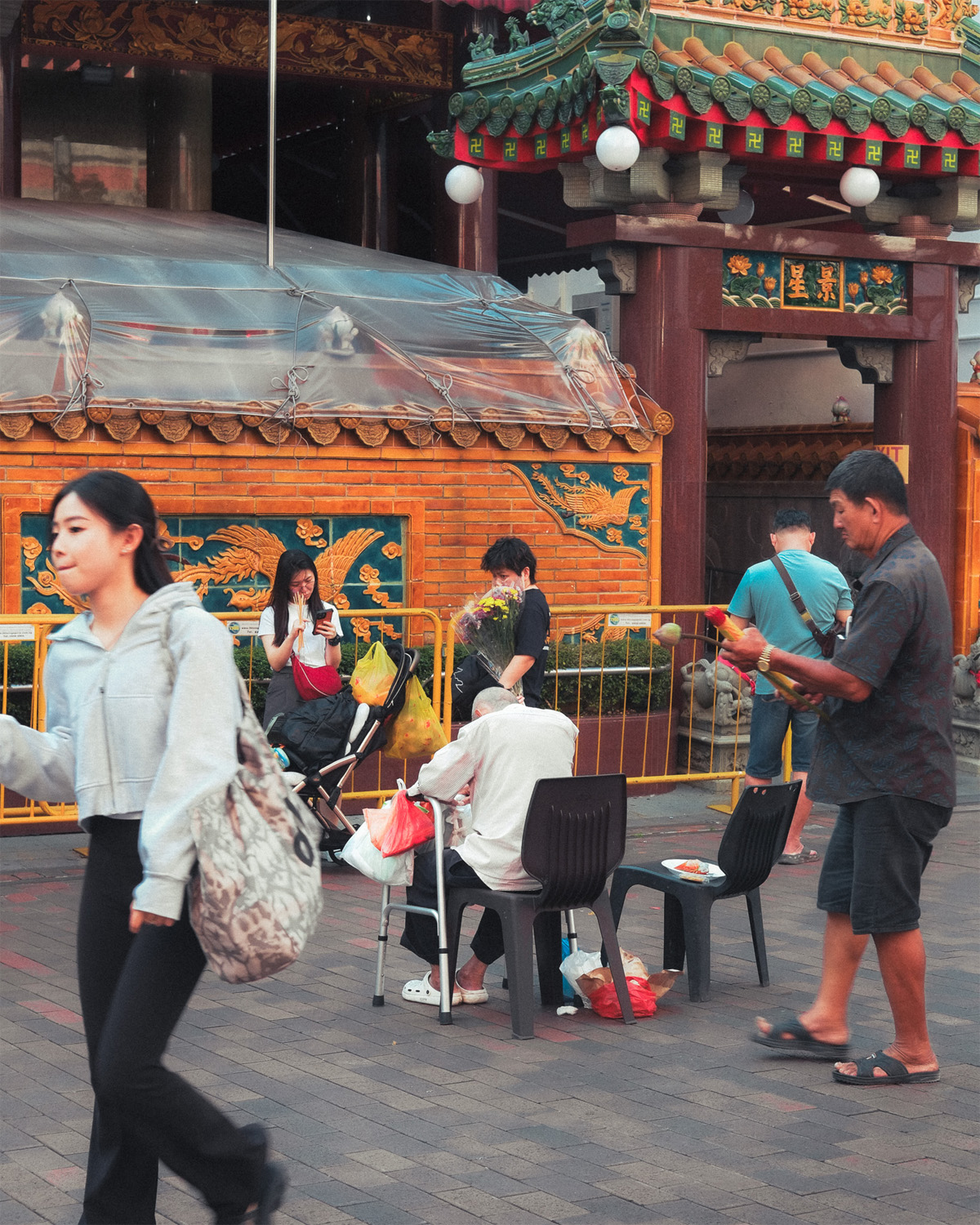
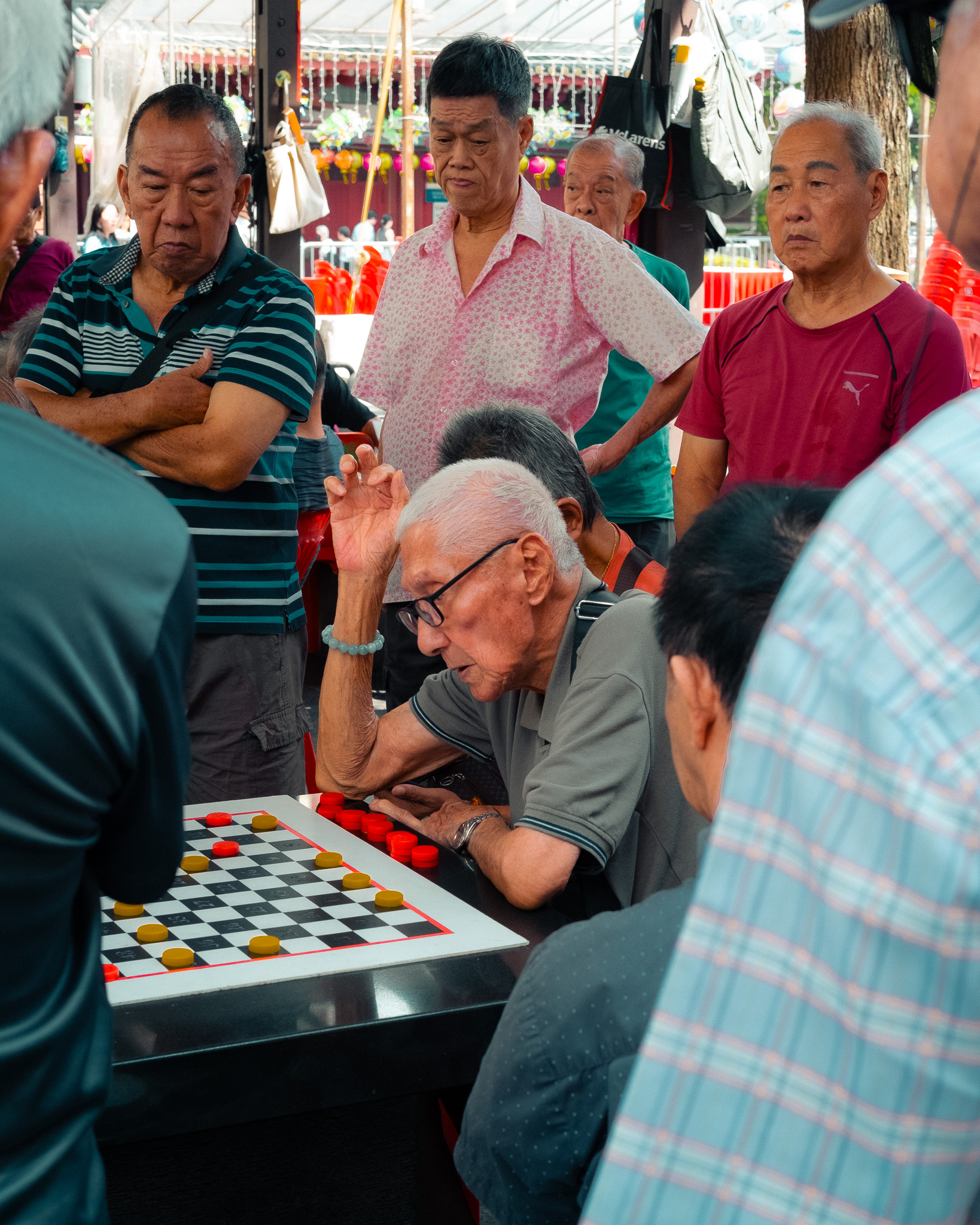
During a recent photo walk, I explored the streets of Chinatown and Bugis to visit areas rich in heritage and history, such as local temples and calligraphy shops. My goal was to capture people interacting with these spaces, documenting these cultural landmarks as they exist in the present moment.
THE TOUCHDESIGNER VISUAL
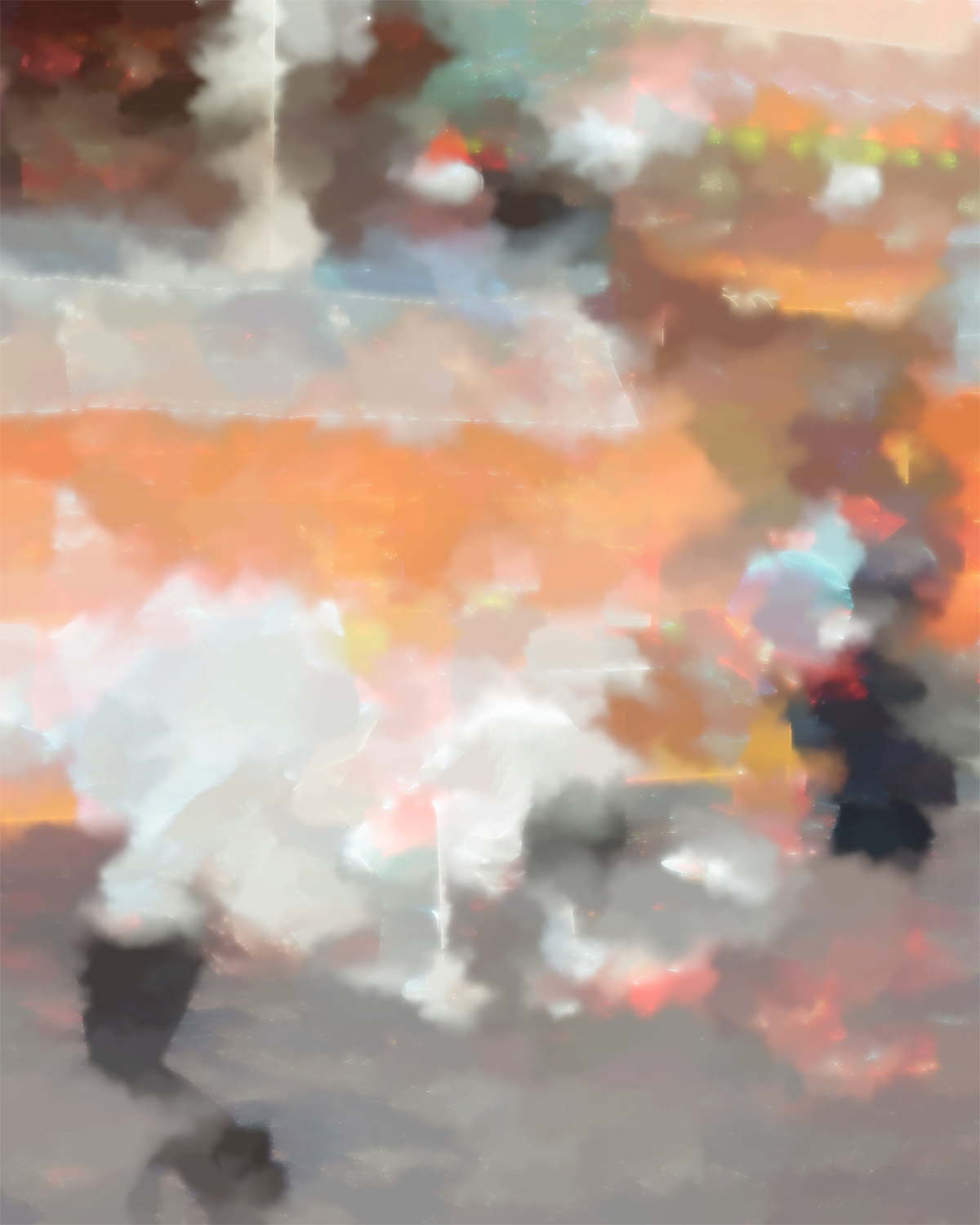
A watercolor visual was created in TouchDesigner using the captured photograph as the source input. To reflect the physical process of submerging film paper into developer liquid, the visual adopts a fluid, liquid-like aesthetic. Subsequently, color data extracted via Arduino adjusts the visual parameters, creating an effect where watery pixels gradually come together to form the final image, effectively simulating the film development process.
LOOKIN AT THE
TECHNOLOGY BEHIND
USING COLOR DETECTION AS A INPUT
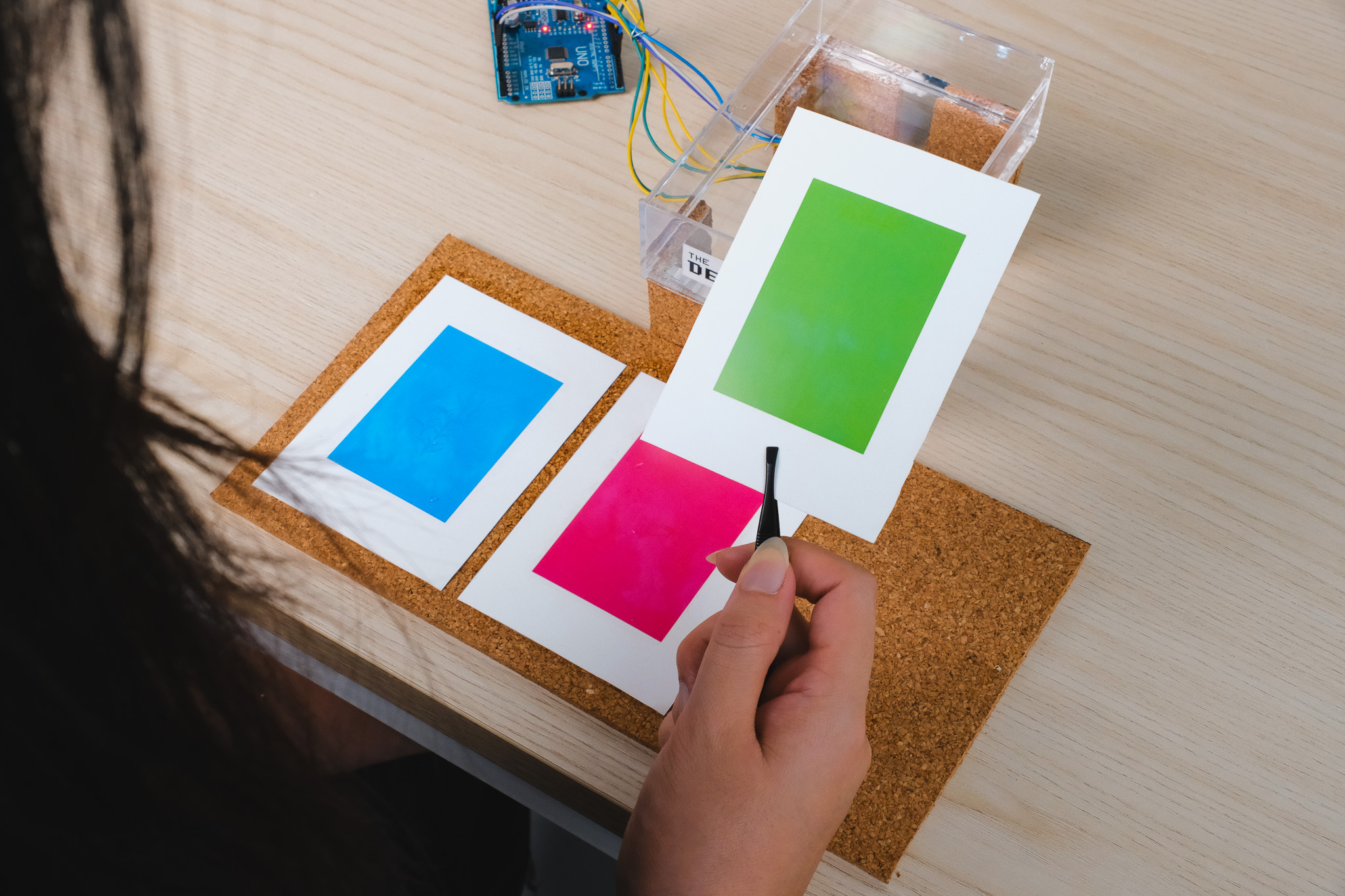
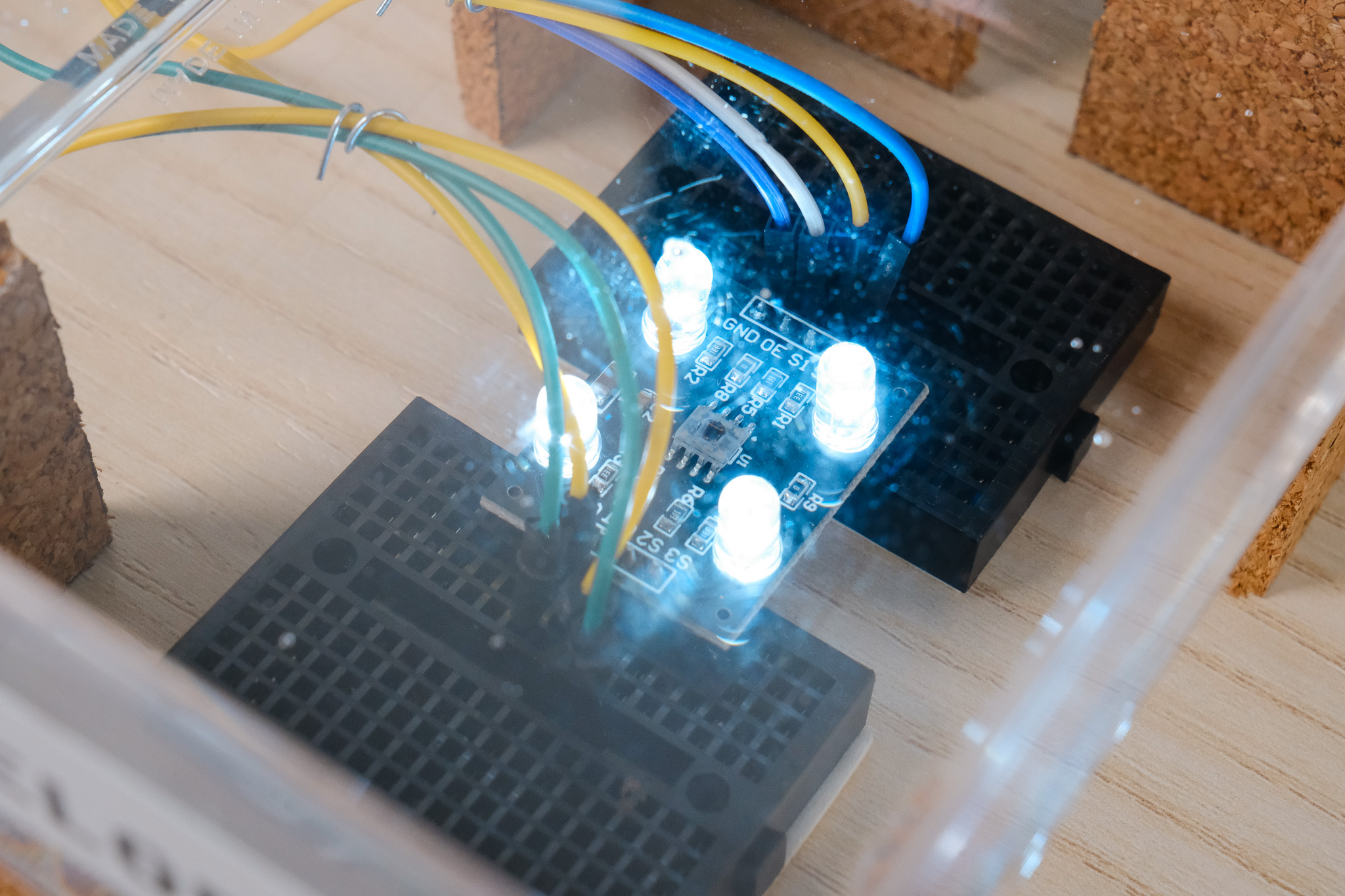
The back of each film paper features three distinct colors: Red, Green, and Blue. A color sensor, positioned beneath a transparent developer tray, detects these colors when the film paper is placed text-side up. Upon detection, an Arduino transmits this data to TouchDesigner, where it is normalized and mapped to trigger on-screen visual changes. Simultaneously, this color data is used to activate the installation's soundscape.